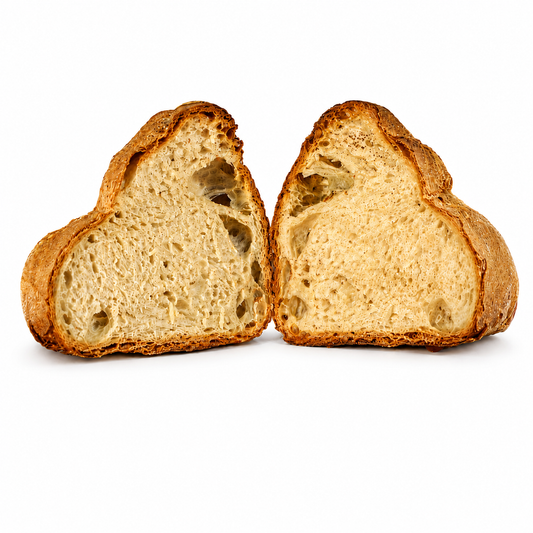
Properly storing bread is essential to preserving its fragrance, texture, and quality over time. Yet, it is also one of the most underestimated aspects by those who buy bread daily: people often think that simply leaving it on the table, putting it in any bag, or storing it in the refrigerator is enough to keep it good longer. In reality, the way bread is stored significantly impacts its evolution in the hours and days following baking.
Understanding how to store bread correctly first means understanding that bread is a living product, subject to continuous transformations even after it leaves the oven. Its structure changes, the crumb evolves, the crust reacts to ambient humidity, and the initial quality of the product profoundly affects its ability to remain fresh over time.
For this reason, there is no single valid method for every bread: the best system depends on the type of bread, its preparation, the crust, the dough's hydration level, and how long you want to store it.
Why bread becomes hard over time
Many people think that bread becomes hard simply because it "dries out," but the reality is more complex. The process that causes fresh bread to lose its softness and fragrance is primarily linked to a natural phenomenon called starch retrogradation.
During baking, the starches in the flour gelatinize due to heat and water, contributing to the soft structure of the crumb. Once the bread cools and hours pass, these starches slowly begin to recrystallize, changing their internal structure. It is this process that makes the bread feel harder, drier, and less elastic.
The speed at which this occurs depends on several factors:
- quality of flour used
- hydration level of the dough
- duration of leavening
- crust thickness
- loaf size
- temperature and humidity of the environment
For this reason, not all breads are stored in the same way. A well-made artisan bread, with long leavening and good hydration, generally tends to keep longer than industrial bread or bread made with accelerated processes.
The best way to store fresh bread in the first few days
If you plan to consume the bread within one or two days of purchase, the best method is to store it at room temperature in a dry, well-ventilated environment.
The ideal solution is to place it:
- in a paper bag
- or in a clean cotton or linen cloth
- preferably inside a bread box or a non-airtight bread container
This system allows the bread to breathe and maintain a correct balance between protection and breathability. Paper and natural fabrics prevent condensation, which is one of the main enemies of preservation.
The bread crust needs to remain dry to maintain its crispness. If the bread is enclosed in an overly humid or hermetically sealed environment, the crust will tend to soften quickly, and the crumb may develop a gummy texture.
Why the refrigerator is almost always a bad idea
One of the most common mistakes is storing bread in the refrigerator, thinking that the cold will prolong its shelf life. In reality, the exact opposite happens.
The low temperatures of the refrigerator accelerate the starch retrogradation process, causing the bread to lose its softness much faster than when stored at room temperature. In other words: bread in the refrigerator hardens sooner.
The only real advantage of the refrigerator is the reduced risk of mold in very humid environments, but in most cases, the damage to the bread's structure far outweighs this benefit.
If your goal is to keep bread good for longer, the best choice is not the refrigerator, but the freezer.
How to freeze bread correctly
When you already know you won't consume the bread within a few days, freezing it is the most effective method to preserve its quality and structure.
To freeze it correctly, it is advisable to:
- cut it into portions before freezing, so you only thaw the necessary amount
- wrap it well in food bags or freezer-safe containers
- freeze it when it is completely cooled but still fresh, ideally within a few hours of purchase
If done correctly, freezing allows a large part of the bread's original characteristics to be maintained.
How to thaw bread without ruining it
The thawing phase is also important. The best way to do this is to leave the bread at room temperature until completely thawed, possibly reheating it in the oven for a few minutes afterwards.
For optimal results:
- let the bread thaw naturally
- slightly dampen the surface if you want to revive the crust
- bake it in a static oven at 180°C (350°F) for 5-8 minutes
This small step helps restore crispness to the crust and enhance the pleasantness of the crumb.
The most common mistakes in bread storage
Many storage problems stem from seemingly harmless incorrect habits.
One of the most frequent mistakes is sealing bread in plastic bags immediately after purchase. Plastic retains moisture and creates condensation, accelerating crust deterioration and increasing the risk of mold.
Another common mistake is cutting all the bread at once. Every surface exposed to air increases the rate at which the crumb loses moisture. If possible, it is always better to slice bread only when consuming it.
Also, storing bread near heat sources or in direct sunlight is a bad habit: excessive heat rapidly alters the internal structure and worsens preservation.
Not all breads are stored in the same way
The shelf life and storability of bread also depend heavily on how that bread was produced. A well-made artisan bread, made with:
- quality flours
- correct leavening
- good hydration
- well-developed crust
- substantial size
tends to keep better over time compared to smaller, very refined products or those made with quick processes.
Large traditional loaves, for example, were historically created precisely to last several days. In the Sassi of Matera, it was common to produce large pieces of bread; their greater mass and more developed crust naturally slow down the hardening process. If you want to learn more about the history of Matera bread, you can consult the dedicated page.
Properly storing bread means respecting the product
Bread is one of the oldest and most symbolic foods in our gastronomic culture. Storing it correctly not only means avoiding waste, but also respecting its value and the work behind every well-made loaf.
Good bread comes from long times, technique, experience, and selected raw materials. Treating it correctly even after purchase is an integral part of the consumption experience.
Knowing how to store it correctly allows not only to enjoy it better, but also to fully appreciate its qualities and characteristics.
Our bread
-
Grandpa Santino Bread
Regular price From €13,99 EURRegular priceUnit price €7,00/kg -
Flat Matera bread
Regular price From €13,99 EURRegular priceUnit price €7,00/kg -
Matera bread with cuts
Regular price From €13,99 EURRegular priceUnit price €7,00/kg -
Traditional Matera bread
Regular price From €13,99 EURRegular priceUnit price €7,00/kg -
Matera bread "croissant shaped"
Regular price From €13,99 EURRegular priceUnit price €7,00/kg